A logo is not just about looking attractive.
It is one of the strongest psychological triggers behind brand recall, customer trust, and long-term business growth.
Many businesses fail to scale not because their product is weak, but because their brand identity is misaligned with their growth stage.
And at the center of that identity sits one crucial element — the logo.
In this guide, you’ll learn what types of logos exist, how each logo type impacts business growth, and which logo type new brands should choose today.
What Are the Different Types of Logos?
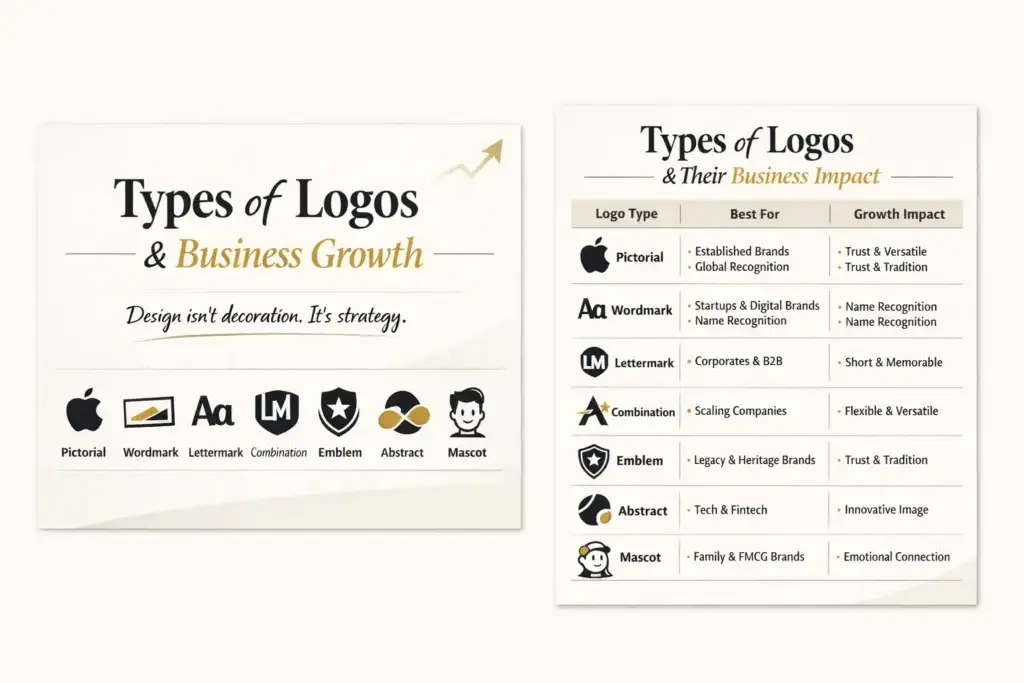
There are seven major logo types used by successful brands worldwide. Each serves a specific business purpose, not just a design preference.
1. Pictorial Logos – When a Symbol Becomes the Brand
What it is:
A logo based on a recognizable real-world image.
Example: Apple
How it affects growth:
Pictorial logos work best when a brand already has strong awareness or storytelling power. Once established, the symbol alone can represent the entire business without words.
Best for:
• Established brands
• Global recognition
• Brands with strong visual storytelling
2. Wordmark Logos – Turning the Name into the Identity
What it is:
A logo made entirely of the brand name using custom typography.
Examples: Google, Coca-Cola
How it affects growth:
Wordmarks are powerful for new and growing businesses. They help audiences learn, pronounce, and remember the brand name quickly, which is essential in early growth stages.
Best for:
• Startups
• Personal brands
• Digital businesses
• SEO-driven brands
3. Lettermark Logos – Simplifying Long Brand Names
What it is:
A logo created using initials instead of the full name.
Examples: IBM, HBO
How it affects growth:
Lettermarks improve memorability for brands with long or complex names while maintaining a corporate and professional tone.
Best for:
• Enterprise brands
• B2B companies
• Corporate institutions
4. Combination Logos – The Most Scalable Choice
What it is:
A mix of text and symbol used together.
Examples: Amazon, Adidas
How it affects growth:
Combination logos are highly flexible. Businesses can use the icon alone, the text alone, or both together — making them ideal for multi-platform branding.
Best for:
• Scaling startups
• E-commerce brands
• Mobile apps
• Global expansion
5. Emblem Logos – Building Trust Through Tradition
What it is:
Text placed inside a badge, seal, or symbol.
Examples: Starbucks, Harley-Davidson
How it affects growth:
Emblems convey heritage, authority, and trust, making them effective for brands rooted in tradition or community.
Best for:
• Legacy brands
• Educational institutions
• Government or cultural brands
6. Abstract Logos – Communicating Ideas, Not Objects
What it is:
A logo using shapes or forms that don’t represent real objects.
Example: Mastercard
How it affects growth:
Abstract logos allow brands to own a unique visual language and communicate values like innovation, connection, or movement without limitations.
Best for:
• Fintech
• Tech startups
• Global brands with diverse audiences
7. Mascot Logos – Creating Emotional Connection
What it is:
A logo built around a character or illustrated face.
Examples: KFC, Michelin
How it affects growth:
Mascot logos humanize a brand. They are excellent for emotional engagement, storytelling, and social media presence.
Best for:
• Food & beverage brands
• FMCG
• Family-oriented or community brands
Which Logo Type Should New Brands Use Today?
Most new and digital-first brands succeed with:
✔ Wordmark logos (for name recognition)
✔ Combination logos (for long-term scalability)
These logo types balance SEO, memorability, and platform flexibility, making them ideal for businesses building authority from scratch.
How a Logo Directly Impacts Business Growth
A well-chosen logo can:
• Increase brand recall
• Improve customer trust
• Strengthen marketing performance
• Support premium positioning
• Enable smoother scaling
A poorly chosen logo does the opposite — no matter how good the product is.
Final Thought
A logo is not just a design decision.
It is a strategic business move.
The brands that grow faster don’t choose logos randomly — they choose them intentionally, based on where they are today and where they want to go tomorrow.
This guide explains the different types of logos and which logo type is best for business growth, startups, and growing brands.